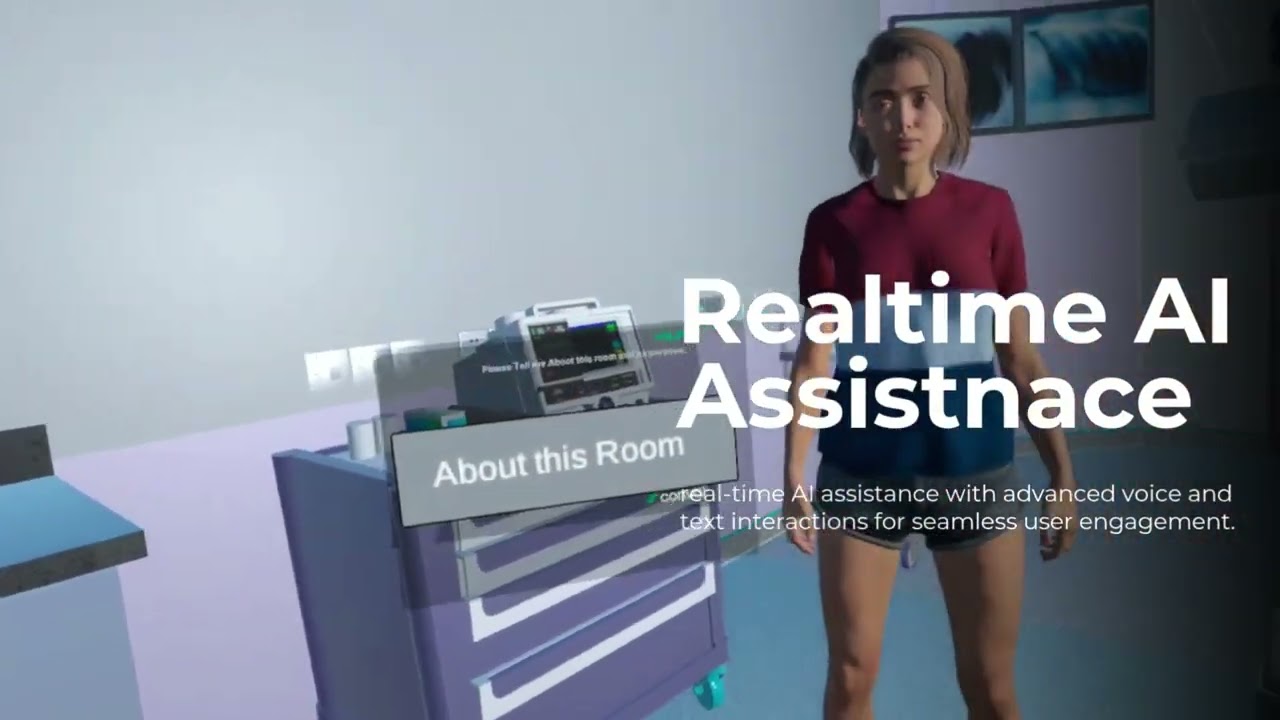
A digital twin is a photoreal 3D copy of a real place or machine. Adding an AI-operable layer lets people and agents query and command it in plain language.
A digital twin is a faithful 3D copy of something real: a building, a plant room, a machine, a site. Most twins stop at being something you can look at. The interesting step is making them something you can operate.
From captured reality to a working model
We start from captured reality: scans, photogrammetry and 3D scenes. From that we build photoreal reconstructions, and where it matters we make them animated, or 4D, so that moving parts and processes are represented as well as surfaces.
The AI layer
On top of the reconstruction sits a simulation layer that AI agents can drive. Instead of clicking through menus, you ask the twin a question or give it an instruction in natural language. This is what people mean by Physical AI and Spatial AI: AI that understands and acts within a model of the physical world.
Where it is useful
- Training: staff practise procedures in a copy of their real workplace.
- Inspection: review a site remotely and query what you are looking at.
- Planning: test a change in the twin before making it in the real space.
- Operations: give teams and agents a shared, current picture of a facility.
We deliver these to headset, desktop and browser, using the same real-time engines and WebXR platform that run our games and virtual worlds.